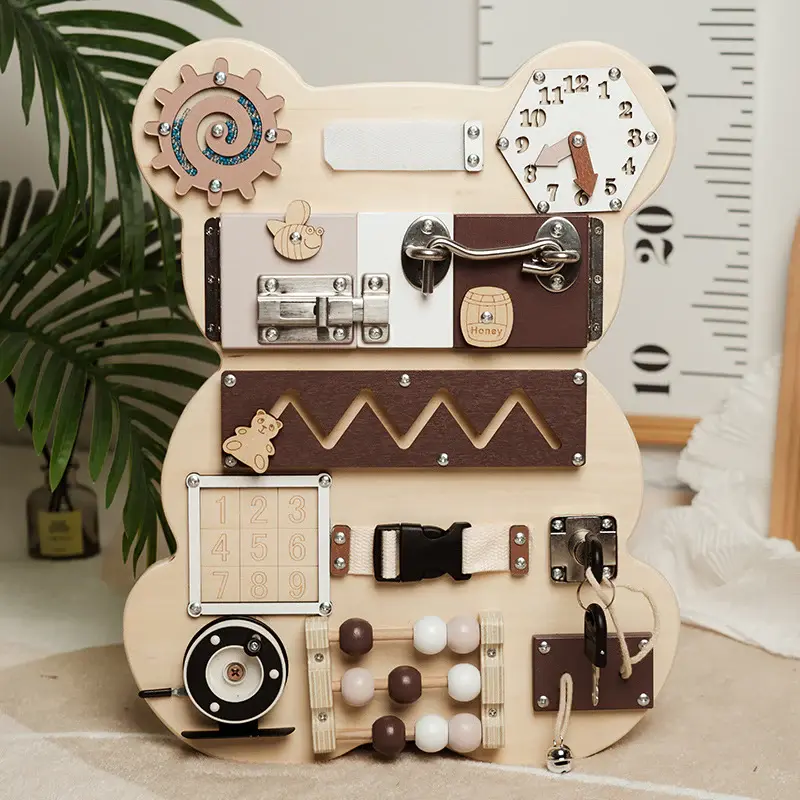
What Is Montessori Play? A Parent's Guide to Purposeful Toys
If you've heard the term "Montessori toys" and wondered what makes them different from the usual toy aisle fare, you're not alone. The Montessori approach to play is simpler than it sounds — and more powerful than most parents realize.
The Core Idea
Dr. Maria Montessori observed that children learn best through hands-on exploration with real materials. Rather than toys that entertain for the child (think flashing lights and auto-playing songs), Montessori-aligned toys invite the child to do the entertaining themselves.
This means open-ended toys made from natural materials — wood, cotton, metal — that engage a child's senses and challenge their developing skills at just the right level.
What Makes a Toy "Montessori"?
There's no official certification, but Montessori-aligned toys typically share these traits:
- Made from natural materials — Wood, cotton, and metal over plastic. Children learn through touch, and natural textures provide richer sensory feedback.
- One skill at a time — A shape sorter teaches shapes. A stacking ring teaches size ordering. The best toys isolate a single concept so the child can master it without overwhelm.
- Self-correcting — The child can see for themselves whether they got it right. A puzzle piece that doesn't fit is its own feedback — no adult narration needed.
- Open-ended — Building blocks can be a tower, a road, a castle, or a bridge. The fewer rules a toy has, the more a child's imagination leads.
- Realistic over fantasy — Especially for children under 3, Montessori favors real-world objects and concepts. A toy kitchen with realistic utensils over a cartoon spaceship.
Why It Matters
Research consistently shows that children who play with open-ended, hands-on toys develop stronger problem-solving skills, longer attention spans, and greater creativity than those who primarily use electronic toys. A 2019 study in JAMA Pediatrics found that electronic toys were associated with decreased quantity and quality of language in toddlers.
The bottom line: simpler toys make for richer play.
Getting Started
You don't need to overhaul your toy collection overnight. Start with one or two high-quality wooden toys that match your child's current developmental stage. Watch how they play. You'll often find that the simplest toy gets the most use.
Our age-based gift guide can help you find the right toy for your child's stage — from first grasping toys for newborns to complex building sets for preschoolers.