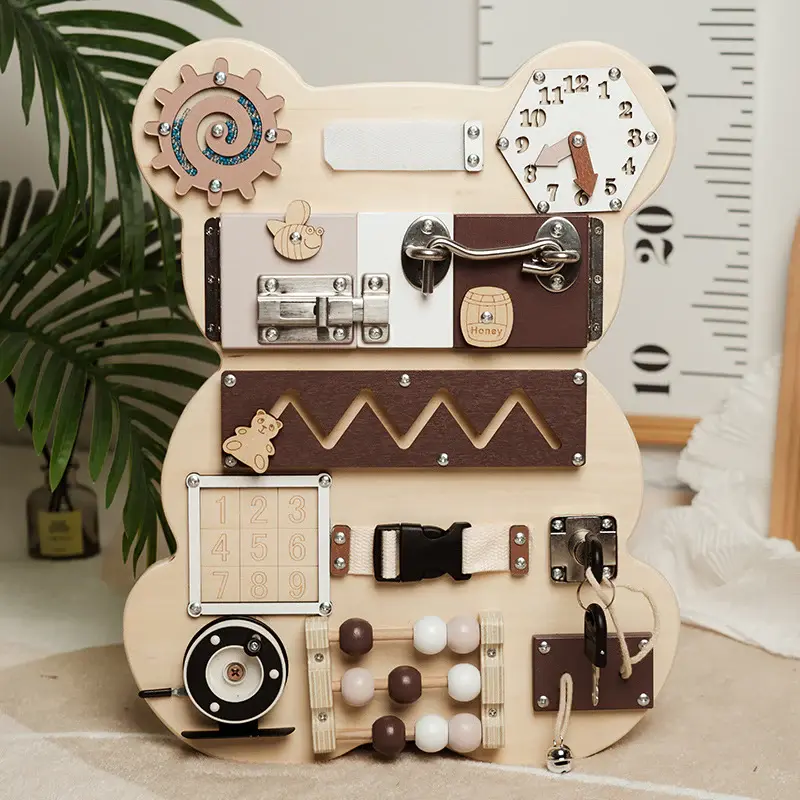
Toy Rotation, the Montessori Way: Why Fewer Toys Out Means Deeper Play
Walk into a typical playroom and you'll see it: bins overflowing, a floor you can't cross barefoot, and — in the middle of it all — a child complaining there's nothing to play with. It sounds like ingratitude. It's actually overwhelm. Toy rotation, a Montessori-inspired approach to the home environment, solves the problem with a counterintuitive move: put most of the toys away.
Done well, toy rotation means your child sees only a small, carefully chosen selection at any one time, while the rest waits in storage. The result, for most families, is longer stretches of focused play, less mess, and toys that feel new again every few weeks — without buying anything.
Why More Toys Often Means Less Play
Adults know the feeling of standing in front of forty salad dressings and walking away with none. Psychologists call it choice overload, and toddlers are especially vulnerable to it. The executive function skills needed to scan options, weigh them, and commit to one are still under construction in a two-year-old brain. Faced with a wall of toys, many children don't choose at all — they dump, skim, and wander.
Research supports what many parents observe at home. A 2018 study from the University of Toledo, published in Infant Behavior and Development, gave toddlers access to either four toys or sixteen. With only four available, children played with each toy for significantly longer and discovered more ways to use it. The researchers concluded that a smaller selection supported better quality of play — deeper engagement, more creativity, more sustained attention.
This lines up with something Montessori educators have practiced for over a century. Dr. Maria Montessori called it the prepared environment: a space with a limited number of purposeful materials, each visible, reachable, and with a home of its own. The order isn't for the adults. It's what lets the child's concentration take root.
The Prepared Environment, at Home
In a Montessori classroom, materials sit on low, open shelves — a handful at a time, never crammed into bins. The child can see every option, reach every option, and return every option without help. That last part matters more than it sounds: when cleanup is genuinely possible for the child, independence follows.
You don't need a classroom budget to replicate this. You need one low shelf unit and a closet. The shelf holds what's "in rotation." The closet holds everything else, out of sight. That's the entire infrastructure.
How to Set Up a Montessori Toy Rotation: The Four-Shelf System
The easiest way to make rotation stick is to give it a structure you don't have to rethink every time. A single low shelf unit with four shelves (or four clearly separate zones) works beautifully:
- Shelf 1 — Hands and fingers: Fine motor work. Think a shape sorter, a threading beads set, or a posting toy. One or two items, not five.
- Shelf 2 — Problem-solving: Puzzles, nesting and stacking toys, matching games — anything self-correcting, where the child can see for themselves whether it worked.
- Shelf 3 — Open-ended play: A basket of wooden stacking blocks, animal figures, or play silks. This shelf has no "right answer," and it's where imagination stretches out.
- Shelf 4 — Language and music: A few favorite books face-out, a shaker or small instrument, picture cards. Quiet-focus materials that round out the louder shelves.
Each shelf holds one to three items, displayed so the child can see them — not stacked, not binned. For most toddlers, six to ten toys total on display is plenty. Everything else goes into labeled boxes in the closet, sorted loosely by the same four categories so future swaps take two minutes instead of twenty.
When to Rotate (and When to Leave Well Enough Alone)
Every one-to-two weeks is a reasonable default, but the calendar isn't really in charge — your observation is. Swap a toy out when:
- It's been untouched for a week or more. No interest right now doesn't mean never; it means not yet. Back to the closet it goes.
- It's been fully mastered. If the puzzle is completed in seconds and abandoned, the challenge is gone. Store it for a younger sibling or a revisit later.
- It causes consistent frustration. A toy that's too hard isn't building grit, it's building avoidance. Shelve it for a month and try again.
And one rule that overrides all the others: never rotate the beloved toy. If your child reaches for the same stacking tower every single morning, it has earned permanent residency. Rotation exists to serve engagement, not to enforce variety for its own sake.
A useful habit: swap only one or two items per shelf at a time. A complete overhaul can feel disorienting to a toddler; a single new arrival feels like an event.
Common Worries, Answered
- "Won't my child miss the stored toys?" Almost never. Out of sight is genuinely out of mind at this age — and the flip side is the reunion effect, where a toy returning from the closet after a month gets greeted like a brand-new gift.
- "What about gifts from relatives?" Accept them warmly, then fold them into the rotation like everything else. A gift that debuts on the shelf three weeks after the birthday often gets far more attention than one buried in the post-party pile.
- "I have two kids at different stages." Either give each child a shelf or two of their own, or choose materials with a wide age range — open-ended toys like blocks and figures tend to serve a 1-year-old and a 4-year-old at once, just differently.
- "How many toys do we actually need?" Fewer than the toy industry suggests. A rotation system runs comfortably on 20 to 30 well-chosen toys total — enough for two or three full cycles before anything repeats.
Start Smaller Than You Think
You don't need new furniture or a free weekend to begin. Tonight, choose eight toys — two per category — and place them where your child can see and reach them. Box up the rest. Then watch what happens over the next week. Most parents notice the change within days: play sessions stretch longer, the floor stays passable, and the "I'm bored" refrain quiets down.
If you're building a smaller, better collection from scratch, our age-based gift guide is a good place to find toys worth a permanent spot in the cycle. The goal was never fewer toys for its own sake. It's more room — on the shelf and in your child's attention — for the toys that matter.